March 6, 2026
Blog
Pinterest has become the default starting point for many home renovation projects. It offers instant inspiration, endless imagery, and beautifully curated interiors from around the world. At first glance, this feels empowering.
However, inspiration without context can quietly undermine a project long before it begins.
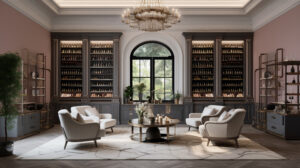
Pinterest promotes styled moments rather than fully resolved homes. Images are created to capture attention, not to demonstrate how a space performs in everyday life. Circulation, lighting conditions, storage requirements, structural constraints, and practical flow are rarely visible.
This creates a growing disconnect between expectation and reality.
Most Pinterest interiors are photographed under ideal conditions. They often rely on bespoke joinery, custom furniture, architectural features, or ceiling heights that are not immediately obvious.
Homeowners respond to the aesthetic without understanding the framework that makes it successful.
A kitchen image may depend on generous natural light, specific proportions, or a layout that simply does not exist within the property being renovated. Attempting to replicate the look without the same architectural foundation leads to compromise, frustration, and unnecessary expense.
Pinterest also encourages decision making in isolation. A living room is saved without considering how it connects to adjoining spaces. Over time, this approach results in homes that feel visually inconsistent and functionally disconnected.
A successful renovation is never about a single room. It is about how every space works together.
Collecting hundreds of images often creates confusion rather than clarity. Homeowners struggle to define what they truly value beyond surface elements such as colour or style.
Without a clear design direction, decisions become reactive.
Furniture may be ordered before layouts are resolved. Kitchens are chosen before circulation and storage have been properly considered. Lighting schemes are selected before architectural features are finalised. These early commitments quietly restrict the rest of the project.
Design should begin with understanding how a home needs to function, not how it appears on a screen.
Professional designers treat inspiration as a reference point, not a template.
Rather than copying an image, they analyse what is working within it. They consider proportion, material balance, lighting, spatial flow, and the emotional response it creates. That understanding is then translated to suit the client’s architecture, lifestyle, and budget.
This process transforms abstract inspiration into practical design solutions.
Layout supports aesthetics. Storage enhances usability. Lighting strengthens atmosphere. Materials are chosen not only for appearance but for durability and longevity.
The result is a home that feels cohesive, intentional, and comfortable to live in.
The most successful renovations are not copied. They are designed.
• Pinterest promotes styled rooms rather than cohesive homes
• Copying images ignores layout, proportion, and functional flow
• Inspiration requires interpretation, not imitation
• Strategic design turns ideas into successful interiors
If you are ready to plan a full home makeover with a cohesive, whole house approach, explore Full Home Interior Design, review the Services, and get in touch via the Contact page.
Ilze Reinke Interiors specialises in luxury interior design for private homes and boutique hotels. Working with clients across Cheshire, Four Oaks, Knutsford, Cheltenham, Gloucestershire, and The Cotswolds, Ilze creates timeless interiors defined by warmth, character, and thoughtful detail. Each project is carefully tailored to reflect the lifestyle, architecture, and individuality of the space.
Whether you are planning a residential project or a boutique hotel interior, Ilze Reinke Interiors works with clients across the UK to bring thoughtful, elegant spaces to life.
Newsletter

Let’s Work Together!
Copyright © 2025 Ilze Reinke Interiors | Website Designed by J&T Promotions